On-Page SEO Checklist 2025: Your Comprehensive Guide to Stellar Rankings
On-page SEO remains a cornerstone of search visibility. This is a practical checklist for 2025, with particular attention to service-based websites and meta tag practice.
Why on-page SEO still matters
On-page work directly influences how search engines interpret a page. A well-optimised page attracts crawlers and improves the experience for the person reading it, which feeds back into engagement and conversion.
For service businesses this matters more than for e-commerce, not less. Service pages compete on clarity and trust rather than product specifications, so the on-page signals carry more of the weight.
The checklist
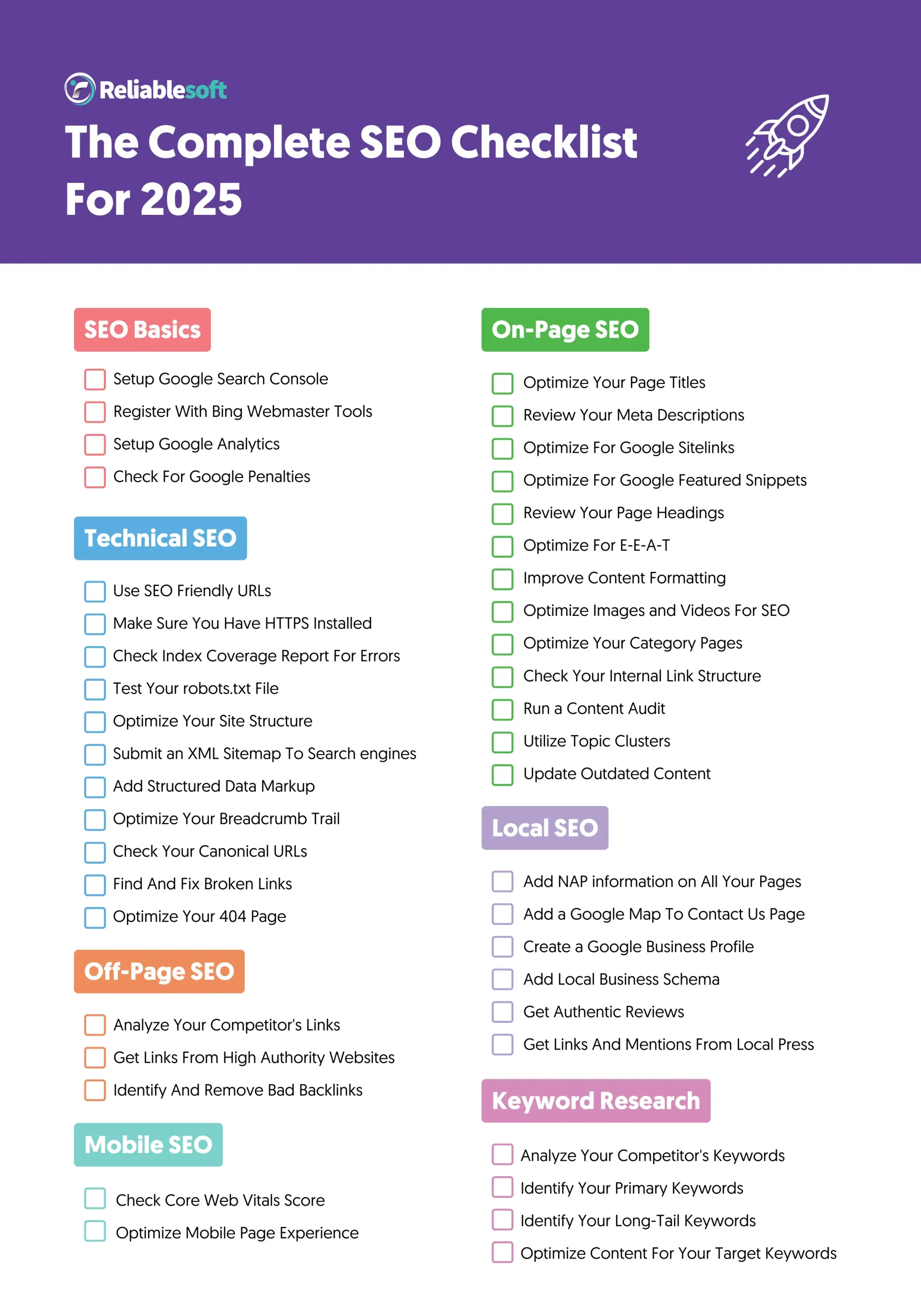
A complete on-page review should cover each of these:
- Strategic keyword usage — one clear target per page, used naturally
- Page title optimisation — under 60 characters, naming the buyer and the intent
- Meta description — under 155 characters, written to earn the click
- Header hierarchy — exactly one H1, logical H2 and H3 nesting
- URL structure — short, readable, matching the page subject
- Content quality and uniqueness — no near-duplicates competing with each other
- Internal and external linking — internal links pointing at the pages that matter commercially
- Optimised images — compressed, correctly sized, with real alt text
- Mobile-friendliness
- Site speed
- Schema markup — structured data matching what is visible on the page
Product pages
E-commerce pages carry their own challenges, chiefly duplication at scale:
- Product title optimisation
- Descriptions written for the buyer rather than copied from the manufacturer
- Image optimisation, including alt text
- User reviews, which add unique content to otherwise templated pages
- Product schema
- Internal linking between related items
Meta tags
Titles and descriptions do two jobs: they tell a search engine what the page covers, and they persuade a human to click. Write for the second and the first tends to follow. Keep within length limits so nothing truncates mid-sentence, and match the language a searcher would actually use.
Service-based websites
Service sites need a different emphasis from product catalogues. Local signals, clear service definitions, proof in the form of case studies and testimonials, and FAQ content answering the questions buyers actually ask all do more work than keyword density ever will.
Conclusion
On-page SEO is unglamorous and cumulative. Fix the structural issues first — headings, titles, descriptions, duplication — then improve content depth.
If you would rather focus on the product than the checklist, see how we build sites or get in touch.